
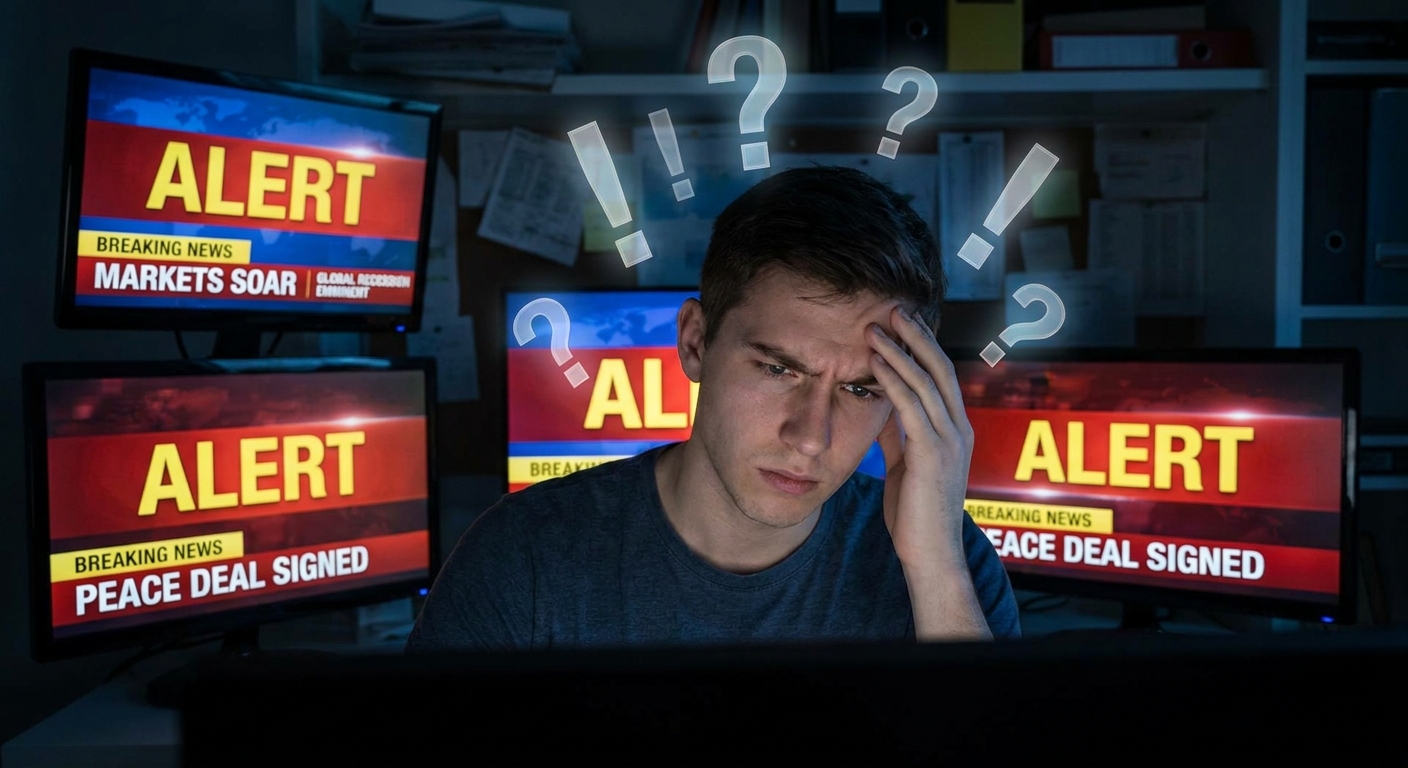
The Misinformation Surge in Breaking Moments
When a major story breaks — an explosion, a high-profile arrest, a surprise election result — your feeds flood with “updates” in seconds. Many are wrong. Some are malicious.
“Breaking news is the perfect cover for disinformation,” says Priyanka Deshmukh, an analyst at the Digital Integrity Lab. “People don’t expect polished narratives; they expect chaos. Bad actors hide in that chaos.”
Here are seven hard red flags that tell you to hit pause before you share.
---
1. No Named Source in the First Two Paragraphs
If you can’t see **who** is providing the core information, you can’t trust the story.
Risky phrases:
- “Sources say…” with no description of who they are
- “It is believed that…” without attribution
- “Reports suggest…” with no link or organization named
Strong coverage will specify:
- Police, fire, or agency officials by title
- Court documents, filings, or official statements
- Credible organizations (Reuters, AP, major outlets) by name
“If the first mention of a source is ‘social media reports,’ assume it’s unverified,” Deshmukh notes.
---
2. Screenshots Instead of Links
When posts share **screenshots of ‘breaking’ headlines or statements** instead of live links, be wary.
Why it’s a red flag:
- Screenshots are easy to edit or fabricate
- You can’t check timestamps or corrections
- You can’t see whether the original has been updated or retracted
Safe practice:
- Tap through to the original outlet, press release, or official feed
- Look for version history or editor’s notes
If no one can produce an original link, treat the claim as unconfirmed.
---
3. Perfectly Fitting Narratives Within Minutes
Real breaking events are messy. If a post within 10–20 minutes:
- Perfectly confirms a political talking point
- Contains a polished meme, slogan, or hashtag campaign
- Already blames a specific group or motive without evidence
…it’s likely propaganda, not reporting.
“Truth lags behind narrative engineering,” says Dr. Omar Feld, a sociologist studying online radicalization. “If a story feels too aligned with someone’s agenda that fast, assume you’re the product.”
Watch for:
- Hashtags created *after* the event but trending instantly
- Pre-made infographics or videos with branding
- Accounts that only post about one political side or issue
---
4. Wildly Different Casualty or Damage Numbers
When outlets disagree by orders of magnitude on:
- Death or injury counts
- Financial losses
- Vote margins
…you’re in a volatile information zone.
Early numbers are:
- Often estimates
- Sourced from different agencies or levels of government
- Revised repeatedly as access improves
Responsible outlets will:
- Use ranges (“at least 5 people…”) with named sources
- Explicitly say numbers are preliminary
- Update counts with time stamps and clear corrections
Skip anyone treating the first number as final.
---
5. Anonymous Accounts “On the Scene” With Perfect Footage
Breaking news spawns insta-accounts claiming to be at the event:
- Brand-new profiles created the same day
- Few followers but viral reach
- Dramatic, perfectly framed video
Red flags in their content:
- No ambient context (no local language, signs, or landmarks)
- Footage that could be from any city, any year
- Watermarks or tags that don’t match the event location
Basic checks you can do in under a minute:
- Reverse image search key frames
- Compare weather, time of day, and shadows to local reports
- Scan account history for other recycled footage
“If the first viral video is from a zero-history account, doubt first, share never,” Deshmukh says.
---
6. Overconfident Headlines, Hesitant Body Text
Mismatched tone is a classic signal of compromised reporting:
- Headline: “Terror Attack Kills Dozens Downtown”
- Body text: “Authorities say they are still investigating the cause. No fatalities have been confirmed.”
That contrast tells you:
- The outlet is optimizing for clicks, not clarity
- The newsroom may not fully control its headline writing
- The story is still too unstable to justify that certainty
Scan for weasel phrases:
- “May be linked to…”
- “Could indicate that…”
- “Seems to suggest…”
If the headline screams while the article shrugs, step back.
---
7. No Updates in a Fast-Moving Story
In genuine breaking situations, facts evolve within minutes.
Be skeptical if:
- A viral post is more than an hour old
- There are no follow-up comments or edits
- Major outlets aren’t converging on the same core facts
“Reliable information usually emerges in layers,” Feld notes. “If you’re staring at the same un-updated hot take two hours later, it’s probably not grounded in reality.”
Look instead for:
- Timestamped updates
- Clear correction notes
- Headline or framing changes that reflect new data
---
How to Protect Yourself in the Next Breaking Story
You can’t slow the news cycle, but you can slow your own reaction.
**Before sharing any ‘breaking’ post:**
1. Check for a named source and link in the first two paragraphs.
2. Open two additional outlets and compare basic facts.
3. Treat visuals as unverified until confirmed by a major outlet.
4. Bookmark live blogs or official agency feeds for direct updates.
Your attention is a resource. In breaking moments, it’s also a weapon. Make sure you’re not the one swinging it blindly.