
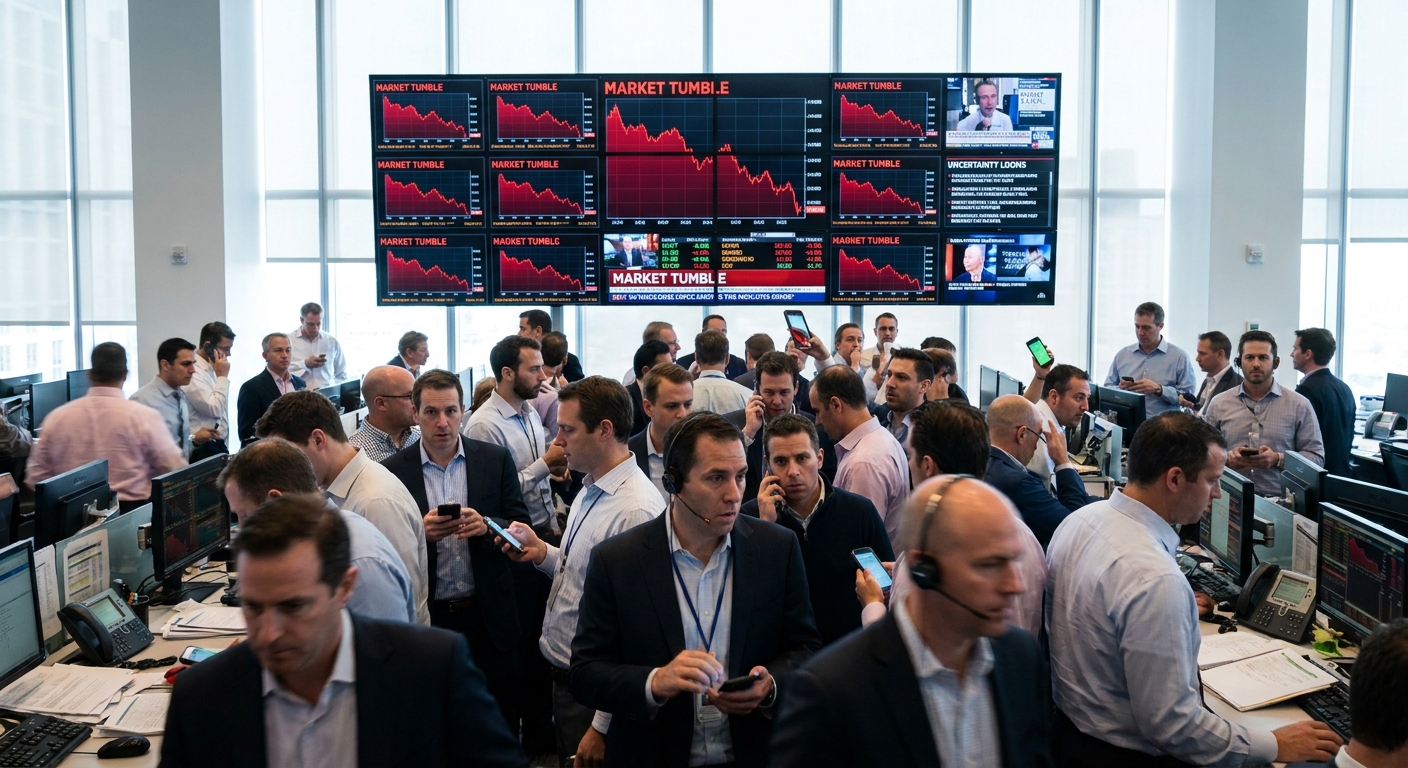
When Headlines Trade Before Humans Do
In global markets, breaking news no longer waits for the evening edition — or even for people.
“Today, the first full reader of a breaking business headline is often a trading algorithm,” says Caroline Wu, a former sell-side analyst now advising funds on media risk. “By the time humans react, the price spike has already happened.”
This shift has rewritten the rules for how economic shocks, corporate scandals, and regulatory surprises move money long before anyone finishes reading the article.
---
How a Single Line Becomes a Billion‑Dollar Move
The pipeline for market-moving breaking news now looks like this:
1. **Event**: An unexpected bankruptcy, regulatory ruling, cyber breach, or executive resignation.
2. **Source alert**: Court filings, agency feeds, or company disclosures hit public databases.
3. **Wire or outlet pushes a headline**: Often auto-generated from filings.
4. **Algorithms ingest the headline**: Natural language models parse sentiment and keywords.
5. **Automated trades fire**: Buy/sell orders flood markets based on that interpretation.
All of this can unfold in under a second.
“The market used to discount the future,” Wu notes. “Now it discounts the headline, then spends days fixing the overreaction.”
---
Why Early Business Headlines Are Especially Fragile
Breaking business news is high-risk because:
- **Legal language is dense**: Subtleties in court findings or regulations don’t fit in a headline.
- **Filings are massive**: A 200-page 8-K can’t be truthfully summarized in 90 characters.
- **Companies spin hard**: Early corporate statements are crafted to calm, not fully inform.
Examples:
- A “CEO to step down” alert may hide a power struggle, a health issue, or a misconduct probe.
- “Regulator fines firm $500M” might sound devastating, but markets may have priced in worse.
- “Cyber incident” might range from minor outage to existential data breach.
Algorithms don’t wait to find out which.
---
Case Study Patterns: The Overreaction–Correction Cycle
While specifics vary, a familiar pattern repeats:
1. **Shock headline** hits wires and platforms.
2. **Algo-driven volume surge** sends the stock, currency, or sector sharply up or down.
3. **Analysts and journalists dig into filings/briefings.**
4. **Clarifications emerge** (e.g., scope is narrower, fine was expected, guidance unchanged).
5. **Price partially retraces** as humans digest the full picture.
“Traders talk about the ‘headline premium’ or ‘discount’ — that first irrational jolt,” says Javier Morales, a London-based macro trader. “If you’re not ready, you end up reacting to a mistake, not a fact.”
---
The Information Hierarchy in a Breaking Market Story
When a big business story breaks, treat information in **this order of reliability**:
1. **Regulatory filings and official documents**
- SEC/EDGAR, SEDAR, national securities regulators
- Full decisions from courts, central banks, antitrust bodies
2. **Company disclosures required by law**
- 8-Ks, earnings releases, material event notices
- Not glossy blog posts or selective tweets
3. **Wire service headlines and first paragraphs**
- AP, Reuters, Bloomberg, etc.
4. **Company press statements and media calls**
5. **Commentary from analysts and talking heads**
6. **Social media hot takes, memes, and rumor threads**
Every step down that ladder is faster and more emotional — and further from the binding legal record.
---
What Savvy Readers and Investors Watch in the First Hour
In the opening hour of breaking business news, professionals focus on a few concrete questions.
1. Is This Truly New Information?
- Was the risk already disclosed in previous filings?
- Have analysts been warning about this scenario for months?
- Did options activity hint the market partially priced this in?
If the answer is “this was widely telegraphed,” the violent first move may fade.
2. Is the Impact One‑Off or Structural?
- One‑time fine vs. permanent business model change
- Temporary outage vs. long-term reputational damage
- Single product recall vs. systemic safety flaw
Markets eventually care more about **future cash flows** than today’s embarrassment.
3. Who Is Confirming What?
- Is there a named regulator, court, or exchange official on record?
- Is the company denying details, or just “declining to comment”?
- Are multiple reputable outlets aligning on numbers and scope?
When only the company is talking, skepticism is a healthy default.
---
How Retail Investors Get Trapped in the Noise
Retail traders are especially vulnerable in breaking moments because they:
- See the news **after** the algos have moved prices
- Rely heavily on social media summaries and screenshots
- Lack time to read source documents during work hours
Typical trap sequence:
1. See a price crash on a chart shared online
2. Spot a scary or euphoric headline
3. Buy the dip or chase the spike based on incomplete info
4. Get wiped out when the market normalizes after clarification
“You’re basically betting *against* machines that saw the news first and have no emotions,” Morales says. “That’s not a game most people win.”
---
A Practical Playbook for Breaking Business News
If you’re a serious reader or investor, use this checklist when markets start whipsawing on headlines:
1. **Find the source document.**
- For corporate news: pull the actual filing or release from the company’s investor relations page or regulator database.
- For policy news: read the central bank/agency statement, not the summary.
2. **Check time stamps.**
- When was the filing posted?
- When did the first headlines hit?
- How long after did price begin to move?
3. **Scan for guidance or forward-looking statements.**
- Are they changing revenue, margin, or capex expectations?
- Or is the shock limited to past behavior and fines?
4. **Watch the second wave of coverage.**
- Within 30–60 minutes, better pieces add analyst quotes and peer comparisons.
- Look for phrases like “largely anticipated,” “in line with expectations,” or “materially changes the outlook.”
5. **Delay major decisions.**
- If you’re not a day trader with a defined strategy, consider waiting until at least the first full news cycle (4–24 hours).
---
What to Watch Next: Smarter Headline Readers
The arms race isn’t slowing:
- **More funds are building NLP models** to parse nuance in regulatory language.
- **Regulators are watching for media manipulation** tied to pump-and-dump schemes.
- **Newsrooms are tightening language** in business alerts to reduce misreadings.
“The edge is shifting from getting news first to understanding it fastest,” Wu argues. “That’s good news for anyone willing to actually read instead of react.”
In the next breaking business story, don’t ask, “How do I beat the algos?”
Ask, “What do they *misread* in this headline — and what will the full story look like when the dust settles?”
That’s where human judgment still matters.