
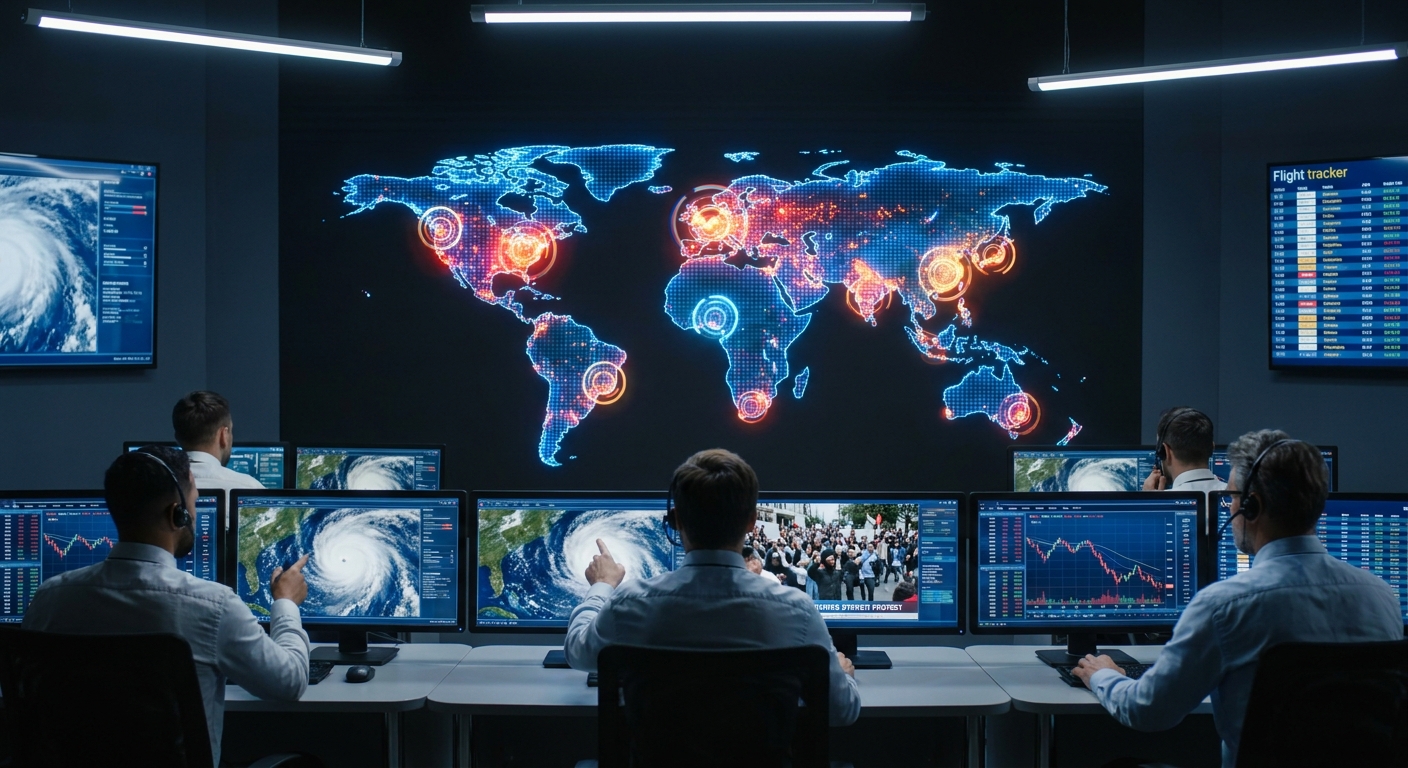
One Shock, Many Crises
A war in one region, a pandemic in another, drought thousands of miles away — and suddenly shelves are empty, currencies wobble, and migration surges. This isn’t coincidence; it’s a cascade.
In a tightly wired world, shocks don’t stay local. They jump borders through trade, finance, climate, and digital systems. Understanding these chains helps you read the news with x-ray vision.
---
The Four Main Highways of Global Contagion
Crises spread along a few key channels. Think of them as highways: once a shock gets on, it moves fast.
1. Trade and Supply Chains
* A factory shutdown in Asia halts car production in Europe.
* A blockade in a key shipping lane delays grain exports to Africa and the Middle East.
> “Modern supply chains are optimized for speed and cost, not for redundancy,” says logistics expert Carla Jensen. “That’s efficient — until something breaks.”
When critical nodes fail — ports, canals, or specialized plants — the effects ripple globally.
2. Finance and Capital Flows
* A debt default by one major economy sparks investor panic.
* High interest rates in the U.S. pull capital out of emerging markets.
This can trigger currency crashes, budget crises, and austerity far from the original problem.
3. Energy and Food Markets
* Conflict in an oil-producing region drives up global fuel costs.
* Drought wipes out harvests in key grain exporters.
Oil, gas, wheat, corn, and fertilizers are globally traded. Local supply shocks push global prices higher, hitting vulnerable populations hardest.
4. Information and Sentiment
* Viral videos fuel protests across borders.
* Misinformation about shortages triggers panic buying.
Markets, voters, and governments react to perceptions as much as facts. Social platforms amplify both.
---
A Simple Cascade: From Conflict to Your Wallet
Let’s walk a clean, hypothetical chain.
1. **Regional conflict erupts** in a hub that exports grain and energy.
2. Ports are disrupted; insurers raise shipping premiums.
3. Shipping volumes drop; futures prices for grain and oil spike.
4. Import-dependent countries face higher food and fuel bills.
5. Governments hike subsidies or cut other spending to cope.
6. Inflation rises; central banks lift interest rates.
7. Higher rates slow growth and push indebted firms into stress.
8. Job losses and price hikes feed public anger.
9. Protests and political instability follow.
One conflict. Multiple continents in turbulence.
> “The risk isn’t just in individual shocks; it’s in how many systems they hit at once,” notes Dr. Samuel Roth, a risk analyst in Zurich.
---
Why the World Is More Vulnerable Now
Several trends amplify cascades:
1. Just-in-Time Everything
Businesses trimmed inventories to cut costs. Great when everything is smooth; disastrous in a crunch.
2. Extreme Weather on the Rise
Heatwaves, floods, and storms are more frequent and intense, knocking out crops, power grids, and transport.
3. High Global Debt
Governments and companies entered the 2020s loaded with debt. Any shock that raises borrowing costs or cuts revenues can quickly become a solvency crisis.
4. Political Fragmentation
Multilateral institutions — the UN, WTO, IMF — face more gridlock. Coordinated responses are harder, so local crises have more time to metastasize.
---
How Governments Try to Break the Chain
No state can insulate itself completely, but many are quietly rewiring their exposure.
1. Diversifying Supply and Demand
* “China+1” or “Europe+1” strategies to avoid reliance on a single country.
* New trade corridors bypassing chokepoints.
2. Stockpiles and Strategic Reserves
* Larger food, fuel, and medical reserves.
* Legal authority to limit exports in emergencies — controversially.
3. Stress-Testing Systems
Borrowed from banking, some governments now test:
* How power grids handle heatwaves.
* How hospitals handle pandemics.
* How payment systems handle cyberattacks.
> “Resilience is finally getting budget lines, not just speeches,” says policy advisor Amaya Torres.
---
What Companies Do Differently in a Cascading World
Boards are no longer asking, “Is there a risk?” but “Which risk hits first?” Common moves:
* **Multi-sourcing:** No more single critical supplier.
* **Nearshoring:** Shorter, more controllable supply chains.
* **Scenario planning:** Building playbooks for pandemics, cyberattacks, and sanctions.
Some pay more for stability today to avoid catastrophic losses tomorrow.
---
What Citizens Should Watch — Beyond the Headlines
You don’t need a PhD in systems theory. You need a habit: when a crisis breaks, ask *what it connects to*.
Key questions:
1. **Does this hit a choke point?** (Major port, canal, resource, or tech input.)
2. **Who is concentrated here?** (Are many countries or industries reliant on this node?)
3. **What is the timing?** (Coinciding with elections, heatwaves, or other stressors?)
4. **How leveraged is the system?** (High debt, thin inventories, strained institutions?)
These four questions turn random headlines into a coherent risk map.
---
Signals That a Local Crisis Is Going Global
Watch for:
* Sharp moves in freight rates and insurance costs.
* Sudden capital controls or currency interventions.
* Emergency meetings of central banks or G20 finance ministers.
* Restrictions on exports of food, fuel, or key commodities.
When those lights start flashing together, contagion is underway.
---
The Takeaway: Fragile, But Not Doomed
The world is more tightly coupled and more shock-prone than in previous decades. That raises the odds that any one event will spill over borders.
But awareness, diversification, and better stress-testing can dampen cascades. The challenge is speed: shocks spread in hours; responses still take days, sometimes weeks.
In a hyper-connected world, the first mover advantage belongs to those who grasp the chain reactions early — and act before the cascade becomes a crash.